
Inflammation and COVID-19

Stay Away From Anything That Causes Inflammation

Medical experts are conveying to avoid anything that causes inflammation during this coronavirus pandemic, but some people have genes that make them more likely to experience inflammation. In 2019, scientists discovered that the coronavirus can trigger an inflammatory response making the symptoms and illness more severe .

From mild stress to chronic health conditions, inflammation can and will wreak havoc on your body and mind. Inflammation is caused by a complex mix of genetic and environmental factors, which can make it very difficult to address – especially while you’re suffering from exhaustion, depression, or any other inflammation-related symptoms.

Excessive immune response related to COVID-19

Every week, more is being learned about the incredible physiological harm that the coronavirus is capable of doing to those infected. This is the critical reason why this virus should not be taken likely.

Some clinicians suspect the driving force in many gravely ill patients’ downhill trajectories is a disastrous overreaction of the immune system known as a “cytokine storm.” Cytokine storm is a hyperinflammatory condition caused by an overactive immune system.  According to scientific research, a cytokine storm is a driving force in COVID-19 mortality rates.

Cytokines are chemical signaling molecules that guide a healthy immune response; but in a cytokine storm, levels of certain cytokines soar far beyond what’s needed, and immune cells start to attack healthy tissues. Blood vessels leak, blood pressure drops, clots form, and catastrophic organ failure can ensue. This can cause inflammation and damage to the lungs and other organs.

Corticosteroids

Doctors have used a class of medicines called corticosteroids – including one called dexamethasone – to help tame that response. These are medications that have been around for a long time and are readily available. “We know this medication very well. It’s been used for many other purposes, and we know the side effects profile and what it can do to the body,” pulmonary and critical care physician Lokesh Venkateshaiah, MD says.

Its use to treat COVID-19 stems from the success of the RECOVERY trial carried out by researchers in the United Kingdom. In the study, hospitalized patients with COVID-19 who received dexamethasone for up to 10 days were less likely to die than those who didn’t. That benefit was only seen in very sick patients – those who had oxygen levels less than 93% or needed supplemental oxygen.

But, doctors have to be careful with dosing. “Overdoing it with this drug ­can potentially put patients at risk for new infections, especially bacterial infections, or even fungal infections,” Dr. Venkateshaiah cautions.

COVID-19 fatigue

Yet after more than ten months, Americans are getting COVID-19 fatigue. Much of the current rise in COVID-19 infections is due to community spread. Taking precautions to prevent the spread of COVID-19 is critical, particularly as the virus continues to evolve.

Your best defense to avoid serious illness and against the physiological harm caused by COVID-19 is to remain vigilant. You must continue to wear a mask, maintain physical distancing and disinfect high-touch surfaces daily. Additionally, you must get vaccinated for the seasonal influenza, wash your hands regularly and stay away from others if you are feeling ill.

COVID-19 vs Seasonal Influenza

COVID-19 symptoms generally appear two to 14 days after exposure. And, with COVID-19, you may experience loss of taste or smell. COVID-19 is more contagious and spread more quickly than the seasonal flu. Severe illnesses, such as lung injury, may be more frequent with COVID-19 than with the flu. The death rate also appears to be higher with COVID-19 than the flu.

Wearing masks

Wearing a cloth mask has been shown to help decrease the spread of COVID-19. Research shows that a significant number of people who have COVID-19 do not have any symptoms and are considered asymptomatic. These people may not know they are transmitting the virus to others when they talk, sneeze or cough, or raise their voice, such as with singing or shouting.

You should wear a cloth mask to reduce the chance of transmitting respiratory droplets to others around you. You wear a mask to protect others, and they wear a mask to protect you.


References:

  1. https://get.selfdecode.com/gene-reports/nm/inflammation/?utm_source=selfhacked&utm_medium=partnerad&utm_campaign=inflammation_report
  2. https://newsnetwork.mayoclinic.org/discussion/mayo-clinic-q-and-a-7-top-covid-19-myths/
  3. https://health.clevelandclinic.org/do-any-drugs-really-work-as-coronavirus-treatments/amp/?__twitter_impression=true

Herd Immunity and the Vaccine

Herd immunity occurs when a large portion of a community ― the herd ― becomes immune to a disease, according to the Mayo Clinic. This makes the spread from person to person unlikely. As a result, the whole community becomes protected — not just those who are immune.

Two paths to herd immunity — vaccines and infection.

Vaccines create immunity without causing illness or resulting complications. Herd immunity makes it possible to protect the population from a disease, including those who can’t be vaccinated, such as those with compromised immune systems.

Herd immunity can also be reached when a sufficient number of people in the population have recovered from a disease and have developed antibodies against future infection.

Experts estimate that 70% of the U.S. population — more than 200 million people — would have to recover from COVID-19 to create herd immunity and halt the epidemic. This amount of infection could lead to serious and potentially long-term complications and millions of deaths.

Since the risk of developing dangerous symptoms from COVID-19 may be greater in people who are older (over 65) or in people of any age who have other serious underlying health problems, such as heart or lung conditions, weakened immune systems, severe obesity, or diabetes. And if many people become seriously ill with COVID-19 simultaneously, the nation’s health care system could quickly become overwhelmed.

Until there is widespread COVID-19 vaccinations, it’s crucial to slow the spread of the COVID-19 virus and protect individuals at increased risk of severe illness, including older adults and people of any age with underlying health conditions. To reduce the risk of infection:

  • Avoid large events and mass gatherings.
  • Avoid close contact (within about 6 feet, or 2 meters) with anyone who is sick or has symptoms.
  • Stay home as much as possible and keep distance between yourself and others (within about 6 feet, or 2 meters) if COVID-19 is spreading in your community, especially if you have a higher risk of serious illness. Keep in mind some people may have the COVID-19 virus and spread it to others, even if they don’t have symptoms or don’t know they have COVID-19.
  • Wash your hands often with soap and water for at least 20 seconds, or use an alcohol-based hand sanitizer that contains at least 60% alcohol.
  • Wear a cloth face covering in public spaces where it’s difficult to avoid close contact with others, especially if you’re in an area with ongoing community spread. for health care providers.
  • Cover your mouth and nose with your elbow or a tissue when you cough or sneeze. Throw away the used tissue.
  • Avoid touching your eyes, nose and mouth.
  • Avoid sharing dishes, glasses, bedding and other household items if you’re sick.
  • Clean and disinfect high-touch surfaces, such as doorknobs, light switches, electronics and counters, daily.
  • Stay home from work, school and public areas if you’re sick, unless you’re going to get medical care. Avoid public transportation, taxis and ride-sharing if you’re sick.

To reduce the spread of COVID-19, everyone needs to continue to use masks, exercise proper hand hygiene, limit travel, avoid congregating, and maintain appropriate social distancing. 


References:

  1. https://www.mayoclinic.org/diseases-conditions/coronavirus/in-depth/herd-immunity-and-coronavirus/art-20486808

Return Kids to In-Person Classroom

Many parents are rightfully concerned that their kids are not receiving the quality of educational services that schools are required, by law, to provide when school districts implement a 100% virtual learning or hybrid classroom model [that ask students to come to school on alternating days] options.

The American Academy of Pediatrics’ (AAP) contends that based on experience and research, remote learning is likely to result in severe learning loss and increased social isolation. Social isolation, in turn, can breed serious social, emotional and health issues: “child and adolescent physical or sexual abuse, substance use, depression, and suicidal ideation. Furthermore, these impacts will be visited more severely on Black and brown children, as well as low-income children and those with learning disabilities.”

Children are safer in their schools. And, there are lots of kids in this country who are, for example, food insecure, who may be experiencing abuse at home — not to mention the obvious academic benefits of simply being in school. We know that remote learning is just not that good.

Nation’s Pediatricians support in-person schooling

The AAP guidance “strongly advocates that all policy considerations for the coming school year should start with a goal of having students physically present in school.” Their guidance says “schools are fundamental to child and adolescent development and well-being.”

The AAP cites “mounting evidence that transmission of the coronavirus by young children is uncommon, partly because they are less likely to contract it in the first place. Tests showed lower coronavirus rates in schools than in their surrounding communities.”

The guidance for in-person schooling includes recommendations to maintain physical distancing, cleaning and disinfection of classrooms, frequent hand-washing, and using outdoor spaces whenever possible.

Largest school system

New York City’s Mayor Bill de Blasio plans to reopen the city’s public elementary schools and return to partial in-person learning. The plan is to reopen schools at the pre-k and K5 levels because “we have so much proof now of how safe schools can be” amid the contagion”, de Blasio remarked.

Yet, concern remains at what is the critical amount of community transmission that is at a safe enough level to open schools.

Parents and schools responsibilities

Schools are requiring parents to attest to the fact that their children are not showing symptoms and that they took their temperature in the morning prior to the student arriving at school.

Additionally, many schools are segregating kids into what they’re calling cohort groups, so that the same small group of 10 or 12 kids will stay together all day. That way, if there is a reported infection from one of those kids, then ideally you’re only contact tracing and quarantining that group instead of every child in the building.

Furthermore, students will be socially distanced and will be wearing masks. The challenge of footprint and the ability to space out desks remains a challenge for most schools. Some schools have put those kids in the gymnasium or had to start holding class outside, but that often requires more teachers.

“There seems to be less transmission from kids to adults than there is adults to adults. Kids don’t seem to be super-spreaders”, said Pediatrician Aaron Carroll of Indiana University. “We don’t have reports of sort of, you know, a kid going somewhere and spreading it to a bunch of other kids or even a bunch of other adults.”

Public health experts and infectious disease experts agree that we all have to do the right thing if we plan to send our kids back to school.


References:

  1. https://www.npr.org/2020/07/15/891598558/is-school-safe-will-districts-test-for-covid-19-answering-back-to-school-questio
  2. https://pediatrics.aappublications.org/content/146/3/e20201440
  3. https://nypost.com/2020/11/29/nyc-elementary-schools-to-reopen-for-in-person-learning-dec-7/
  4. https://www.msn.com/en-us/news/us/american-academy-of-pediatrics-says-benefits-of-in-person-learning-outweigh-coronavirus-risks/ar-BB16b9W9

Benefits of Regular Exercise for the Brain

There are many long-term benefits of regular exercise for your brain.

Studies have shown how essential and significant exercise or physical activities can be for keeping your brain fit and healthy. And, you can actually build a stronger brain through exercise.

Regular exercise improves mood

Regular exercise has a significant positive influence on mental well-being and can boost the mental health. Thus, if you need an emotional lift or a need to relieve the stress of a trying day? Exercise or moderate physical activity, like a brisk walk, is the solution.

Physical activity stimulates various brain chemicals that may leave you feeling happier, more relaxed and less anxious.

Endorphins

The body’s feel-good chemical, known as endorphins, are released during exercise. Endorphins help focus your mind, reduce the impact of pain on your body, and improve your mood. In fact, some reports indicate the endorphins released during exercise have much of the same effect as traditional anxiety medication, and the results can last for hours afterward. There is ample evidence pointing towards endorphins’ positive effects.

Take your brain to the gym to maximize mental and whole-body health

Evidence does suggest that resistance training and aerobic exercise — walking, running, biking, swimming — will help your brain. In one study, older adults with mild cognitive impairment who lifted weights two to three times a week improved muscle tone and cognitive function, according to the Mayo Clinic.

  • Moreover, walking and other moderate aerobic exercise has been shown to help stabilize your mood and help with depressive symptoms. Studies have also found that regular exercise helps people better control their stress and regulate their emotions.
  • Physical activity contributes to learning. In one study, when teachers added exercise routines to math lessons — called motor-enriched learning — math scores improved faster for the exercisers than for the kids who didn’t exercise during the lesson. Other studies have found that exercise helps improve reading comprehension, too.
  • A few of the brain enhancing findings to motivate you to get started today.

    1. Feel better.
    2. Enhance learning. While scientists don’t fully understand how
    3. Sharpen memory.
    4. Improve vision.

    Your brain is amazing. Billions of nerve cells work together in harmony to coordinate every second of your life: your movements, behavior, thoughts, memories and emotions. So take your brain to the gym to maximize whole-body health.


    References:

    1. https://www.mayoclinic.org/healthy-lifestyle/fitness/in-depth/want-a-strong-brain-exercise/art-20390074
    2. https://www.mayoclinic.org/healthy-lifestyle/fitness/in-depth/exercise/art-20048389

    Immune Response from COVID-19 Vaccine

    Experiencing an immune response was better than getting Covid-19

    Many participants in Moderna and Pfizer’s coronavirus vaccine trials experienced an “immune response” such as high fever, body aches, bad headaches, daylong exhaustion and other symptoms after receiving the COVID-19 vaccine shots.

    While the symptoms were uncomfortable for many, the participants said the symptoms went away after a day, sometimes sooner, and that “it was better than getting Covid-19”.

    “We really need to make patients aware that this [COVID-19 vaccine] is not going to be a walk in the park,” Dr. Sandra Fryhofer of the American Medical Association said. “They are going to know they had a vaccine. They are probably not going to feel wonderful. But they’ve got to come back for that second dose.”

    Both companies, Moderna and Pfizer, acknowledged that their vaccines could induce “immune response” — side effects — that are similar to symptoms associated with mild COVID-19, such as muscle pain, chills and headache.

    It’s normal to feel under the weather or even somewhat ill—fatigued, achey, or experience a fever—after getting a vaccine shot. This results from the robust immune response as the body’s creating antibodies, actual protection against the coronavirus. It will happen to a percentage of the people who get the vaccine shot.

    In other words, feeling like you’re in the early stages of getting the coronavirus is actually a sign that you’ll be protected from the actual virus. What you’re feeling is the body’s defense system gearing up.

    Most vaccine shots mimic a virus entering your body. Immune cells, though, fire off chemical alarms as soon as they notice any virus-like particle. They activate the innate immune system, a generalized response that tries to make the body unlivable for any potential pathogen. That inflammatory reaction can cause a bit of a fever or a tiny swollen lump near the injection site.

    The fatigue you might feel comes from gearing up a more specialized immune defense. Tiny, specialized cells called B-cells create antibodies, which are cellular fighter pilots specific to each virus. Making these antibodies requires expending a little extra energy at first, but the payoff is future protection: Once they’re present in your plasma, the antibodies can patrol for future viruses.

    Additionally, it takes about two weeks for your body to whip its antibodies into shape; you could pick up a coronavirus in the window between getting your jab and when protection kicks in. That’s why it’s important to make sure you only get a coronavirus vaccine shot, or any vaccine, when you’re feeling healthy.

    Not everyone will notice these symptoms after getting the vaccine shot. But if you do seem a bit off, the feeling shouldn’t stick around for more than a day or two, and shouldn’t require a visit to your healthcare provider.


    References:

    1. https://www.cnbc.com/2020/11/23/covid-vaccine-cdc-should-warn-people-the-side-effects-from-shots-wont-be-walk-in-the-park-.html
    2. https://finance.yahoo.com/news/feeling-sick-getting-flu-shot-150519027.html

    COVID-19: How to protect yourself

    To slow the spread of COVID19, CDC recommends that people wear masks in public settings when around people not living in their household, especially when other social distancing measures are difficult to maintain.

    Learn more: bit.ly/30QOzQF
     

    Face masks are the most important, powerful tool the country has to combat the COVID19 pandemic. “We have clear scientific evidence that face masks work”, said Dr. Redfield, Director of CDC. “So please wear one to protect yourself, your family, your community, and your nation.”

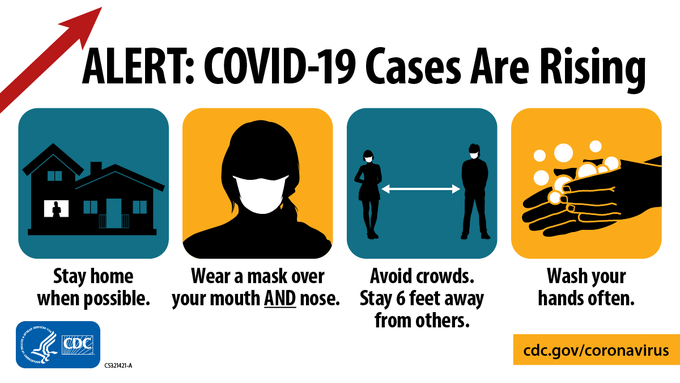
    COVID19 cases are rising nationwide. Case rates in the last 7 days were highest in the Midwest. This Thanksgiving, protect yourself and loved ones:

    • Avoid Travel.
    • Gather virtually or outdoors.
    • Wear a mask.
    • Stay 6 feet from others.
    • Wash hands.


    References:

    1. https://www.cdc.gov/coronavirus/2019-ncov/prevent-getting-sick/about-face-coverings.html

    Holiday Season Health and Safety Precautions

    U.S. states grapples with a resurgence of coronavirus infections and new lockdowns on local economies

    As Americans prepare to celebrate the holidays with family and friends, it’s important to take precautions to keep everyone safe. As you prepare for your Thanksgiving, it is also important that family and friends should consider their local numbers and rates of COVID-19 cases when deciding to host or attend a holiday celebration.

    Americans should consider safe alternatives to the traditional ways of celebrating. COVID-19 can easily pass from person to person through close contact and it is difficult to maintain a safe distance with high volume holiday season activities.

    During this holiday season, public health experts offer the following health and safety recommendations:

    Protecting Yourself from COVID-19 During Gatherings and Celebrations

    • Do not host or participate in any festivities if you have been diagnosed, exposed to, or awaiting results from a COVID-19 viral test.
    • Limit the number of attendees as much as possible.
    • Provide or encourage attendees to bring supplies to help you and others stay healthy (i.e. extra masks, hand sanitizer, and tissues).
    • All individuals should wash their hands or use an alcohol-based hand sanitizer frequently.
    • If someone feels ill during the holiday season, get tested for COVID-19 and avoid going out in public or being around at-risk individuals.
    • Older adults or persons with certain underlying medical conditions who are at increased risk of severe illness from COVID-19, or live or work with someone at increased risk of severe illness, should avoid in-person gatherings with people who do not live in their household.
    • Consider hosting an outdoor gathering rather than an indoor gathering.
    • Guests who have traveled from other areas or towns should distance themselves from people who are 65 or older and people of any age who have underlying health issues such as lung or heart disease.
    • Hosts entertaining at home should make sure frequently touched surfaces are cleaned and disinfected before and after gatherings.

    Holiday Travel

    • People who are sick should not travel—even if symptoms are mild, infection can spread to others.
    • When traveling always wear a mask to keep your nose and mouth covered when in public places.
    • Avoid busy eating areas, such as restaurants during high volume mealtimes, if you plan to eat out at a restaurant.
    • If serving any food, consider having one person serve all the food so that multiple people are not handling the serving utensils.
    • If you are traveling to another state on a commercial flight, wear a mask and social distance as much as possible. If you feel ill upon return, get tested for COVID-19 as soon as possible.

    STAY SAFE!!!


    References:

    1. http://www.floridahealth.gov/newsroom/2020/11/111920-safe-and-healthy-holiday-season.pr.html

    CDC Recommends Avoiding Traveling over Thanksgiving

    The U.S. Centers for Disease Control and Prevention “strongly” recommends that Americans avoid traveling to see family members and friends over Thanksgiving. With the spread of the disease exploding in the U.S. and with several dozen states shattering records for daily new confirmed cases in the past week alone, the virus appears to be exponentially spreading across the country with records for new cases per capita being set in midwestern states.

    “As we’re seeing exponential growth in cases, and the opportunity to translocate disease, or infection from one part of the country to another leads to our recommendation to, to avoid travel at this time,” said Dr. Henry Walke, CDC’s Covid-19 incident manager commented.

    As of Wednesday, 11/18/2029, more than 250,000 Americans have died from COVID-19, according to data compiled by Johns Hopkins University. And, roughly 1 million new COVID-19 cases have been recorded in the U.S. in the past week.

    Risk comes not just from the mode of travel, but from transportation hubs that can make physical distancing more difficult.

    Holidays typically attract large gatherings, which tend to be associated with higher COVID-19 transmission levels. As a result, you want fewer people gathering than usual, and it’s even better if they’re people already in your “bubble.”

    Risk factors to consider before attending a gathering include community spread of COVID-19, both where the gathering is held and attendees are coming from; exposure during travel; the location and duration of the gathering; the number of attendees and capacity for physical distancing; and attendees’ preventive behaviors before and during the gathering, according to broader CDC advice on how to navigate holiday celebrations and gatherings.

    The risk level also depends on attendees’ social contacts and exposures over the preceding couple of weeks, M. Kit Delgado, an assistant professor of emergency medicine and epidemiology at the University of Pennsylvania explained. Sitting out this year’s big family gathering can help keep everyone safe — especially vulnerable family members — and avoid overburdening hospitals during flu season.

    “Unfortunately, the merriment we crave — eating, drinking and singing together in a cozy room — are among the highest-risk scenarios for transmitting COVID-19,” Delgado said.

    The dire COVID-19 infection numbers already had people reconsidering their Thanksgiving plans. AAA estimated that fewer Americans will travel for the holiday than last year — though this year’s number still hovers around 50 million people.


    References:

    1. https://on.mktw.net/3pGIPEF
    2. https://www.npr.org/sections/coronavirus-live-updates/2020/11/19/936715870/dont-travel-for-thanksgiving-cdc-warns

    Fitness Program: Five Steps to a Healthy Lifestyle | Mayo Clinic

    Any amount of physical activity or exercise is better than none at all.

    By Mayo Clinic Staff

    Starting a fitness program may be one of the best things you can do for your health. Physical activity can reduce your risk of chronic disease, improve your balance and coordination, help you lose weight, improve your metabolic health and reduce your metabolic age — and even improve your sleep habits and self-esteem.

    There are three kinds of fitness:

    • Aerobic fitness. Aerobic activities condition your heart and lungs. Aerobic means “with oxygen.” The purpose of aerobic conditioning is to increase the amount of oxygen that is delivered to your muscles, which allows them to work longer. Any activity that raises your heart rate and keeps it up for an extended period of time will improve your aerobic conditioning.

    • Muscle strengthening. Stronger muscles can mean either more powerful muscles that can do bigger jobs (such as lifting heavier weights) or muscles that will work longer before becoming exhausted (endurance). Weight training (resistance training) or simple exercises such as push-ups are two examples of ways to focus on muscle strengthening.

    • Flexibility. Like aerobic fitness and muscle strengthening, flexibility is a result of physical activity. Flexibility comes from stretching. Your muscles are repeatedly shortened when they are used, especially when exercising. They need to be slowly and regularly stretched to counteract the repeated shortening that happens through other activities.

    You can start your personal fitness program with simple steps.

    1. Assess your fitness level

    You probably have some idea of how fit you are. But assessing and recording baseline fitness scores can give you benchmarks against which to measure your progress. To assess your aerobic and muscular fitness, flexibility, and body composition, consider recording:

    • Your pulse rate before and immediately after walking 1 mile (1.6 kilometers)
    • How long it takes to walk 1 mile, or how long it takes to run 1.5 miles (2.41 kilometers)
    • How many standard or modified pushups you can do at a time
    • How far you can reach forward while seated on the floor with your legs in front of you
    • Your waist circumference, just above your hipbones
    • Your body mass index

    2. Design your fitness program

    It’s easy to say that you’ll exercise every day. But you’ll need a plan. As you design your fitness program, keep these points in mind:

    • Consider your fitness goals. Are you starting a fitness program to help lose weight? Or do you have another motivation, such as preparing for a marathon? Having clear goals can help you gauge your progress and stay motivated.
    • Create a balanced routine. For most healthy adults, the Department of Health and Human Services recommends getting at least 150 to 300 minutes of moderate aerobic activity or 75 to 150 minutes of vigorous aerobic activity a week, or a combination of moderate and vigorous activity. The guidelines suggest that you spread out this exercise during the course of a week. Greater amounts of exercise will provide even greater health benefits.

    But even small amounts of physical activity are helpful. Being active for short periods of time throughout the day can add up to provide health benefits.
    Do strength training exercises for all major muscle groups at least two times a week. Aim to do a single set of each exercise, using a weight or resistance level heavy enough to tire your muscles after about 12 to 15 repetitions.

    • Start low, develop exercise habit and progress slowly. If you’re just beginning to exercise, start cautiously and progress slowly. If you have an injury or a medical condition, consult your doctor or an exercise therapist for help designing a fitness program that gradually improves your range of motion, strength and endurance.
    • Build activity into your daily routine. Finding time to exercise can be a challenge. To make it easier, schedule time to exercise as you would any other appointment. Plan to watch your favorite show while walking on the treadmill, read while riding a stationary bike, or take a break to go on a walk at work.
    • Plan to include different activities. Different activities (cross-training) can keep exercise boredom at bay. Cross-training using low-impact forms of activity, such as biking or water exercise, also reduces your chances of injuring or overusing one specific muscle or joint. Plan to alternate among activities that emphasize different parts of your body, such as walking, swimming and strength training.
    • Try high-interval intensity training. In high-interval intensity training, you perform short bursts of high-intensity activity separated by recovery periods of low-intensity activity.
    • Allow time for recovery. Many people start exercising with frenzied zeal — working out too long or too intensely — and give up when their muscles and joints become sore or injured. Plan time between sessions for your body to rest and recover.
    • Put it on paper. A written plan may encourage you to stay on track.

    3. Assemble your equipment

    • You’ll probably start with athletic shoes. Be sure to pick shoes designed for the activity you have in mind. For example, running shoes are lighter in weight than cross-training shoes, which are more supportive.
    • If you’re planning to invest in exercise equipment, choose something that’s practical, enjoyable and easy to use. You may want to try out certain types of equipment at a fitness center before investing in your own equipment.
    • You might consider using fitness apps for smart devices or other activity tracking devices, such as ones that can track your distance, track calories burned or monitor your heart rate.

    4. Get started…get moving

    Begin your fitness program and keep these tips in mind:

    • Start slowly and build up gradually. Give yourself plenty of time to warm up and cool down with easy walking or gentle stretching. Then speed up to a pace you can continue for five to 10 minutes without getting overly tired. As your stamina improves, gradually increase the amount of time you exercise. Work your way up to 30 to 60 minutes of exercise most days of the week.
    • Break things up if you have to. You don’t have to do all your exercise at one time, so you can weave in activity throughout your day. Shorter but more-frequent sessions have aerobic benefits, too. Exercising in short sessions a few times a day may fit into your schedule better than a single 30-minute session. Any amount of activity is better than none at all.
    • Be creative. Maybe your workout routine includes various activities, such as walking, bicycling or rowing. But don’t stop there. Take a weekend hike with your family or spend an evening ballroom dancing. Find activities you enjoy to add to your fitness routine.
    • Listen to your body. If you feel pain, shortness of breath, dizziness or nausea, take a break. You may be pushing yourself too hard. Remember to drink plenty of water.
    • Be flexible. If you’re not feeling good, give yourself permission to take a day or two off.

    5. Monitor and track your progress

    Retake your personal fitness assessment six weeks after you start your program and then again every few months. You may notice that you need to increase the amount of time you exercise in order to continue improving. Or you may be pleasantly surprised to find that you’re exercising just the right amount to meet your fitness goals.

    If you lose motivation, set new goals or try a new activity. Exercising with a friend or taking a class at a fitness center may help, too.

    Starting an exercise program equates to healthy habits that last a lifetime

    Health, not gold or silver, is the greatest wealth! Billy Graham

    Starting an exercise program is an important decision for your health and well-being. But it doesn’t have to be an overwhelming or strenuous or anxiety producing one. By planning carefully, starting slowing and pacing yourself, you can establish a healthy habit that lasts a lifetime


    Reference:

    1. https://www.mayoclinic.org/healthy-lifestyle/fitness/in-depth/fitness/art-20048269/?_ga=2.141564786.1134128569.1602276705-291377975.1601941478
    2. https://wa.kaiserpermanente.org/kbase/topic.jhtml?docId=ta3112

     
    Learning, Growing and Getting Better and Better Everyday!!!

    Psychosocial Health

    It’s important that you choose to be happy, healthy and at peace!

    Health is defined as the overall mental, emotional and physical state of a person; the absence of disease and ailment. On the other hand, wellness or well-being refers to the state of being in optimal mental and physical health.

    But wellness is more than optimal mental, emotional and physical health. It’s about living a life in harmony, full of personal responsibility and taking proactive steps for one’s entire well-being. Thus, a person living life very well controls risk factors that can harm them. Risk factors are different types of actions or conditions that increase a person’s chances for illness or injury.

    Psychosocial (mental, emotional, social, and spiritual) health and wellness

    “The secret of a better and more successful life is to cast out those old dead unhealthy thoughts.” Dr. Norman Vincent Peale

    Psychosocial health includes four important components of well-being. It means being mentally, emotionally, socially, and spiritually sound which fortunately is no longer lost on traditional modern medicine. There’s plenty of proof that a healthy mind, content heart and grateful attitude are just as important for the prevention of diseases and therapeutic treatment. Therefore, this concept of psychosocial health, a state of mental, emotional, social, and spiritual well-being, deserves much attention and additional research.

    Basic Traits of Psychosocial Health

    “The greatest revolution of our generation is the discovery that human beings, by changing the inner attitudes of their minds, can change the outer aspects of their lives.” William James

    Individuals who are deemed to be psychosocially healthy aren’t completely devoid of problems. Actually, it’s not the quantity or quality of a problem, which makes someone sound in this respect. It’s the way people view themselves and how they view and response to stressful situations that sets psychosocially healthy people apart from those who are not. Here are just a few traits shared by these robust individuals. They:

    • Like themselves
    • Accept their mistakes
    • Take care of themselves
    • Have empathy for others
    • Control their anger, hate, tension, and anxiety
    • Are optimistic
    • Can work alone and with others equally well

    Mental Health

    “To make your mind healthy, you must feed it nourishing, wholesome thoughts.” Dr. Norman Vincent Peale

    The thinking portion of psychosocial health is known as mental health. Your beliefs and values in life, as well as how you relate to others and respond to situations in your life, are a reflection of mental health, which overlaps with the other aspect of health.

    When something happens to you that you don’t like and you respond in a positive manner by accepting your mistake and looking forward to its correction, then that’s good. But if you show up late for work regularly, get fired, and then blame anyone but yourself, then that may be an indicator of less than ideal mental and emotional health.

    Emotional Health

    The feeling part of psychosocial health is called emotional health. This includes things like anger, love, hate, and happiness. Oftentimes, emotional and mental health overlap a great deal in some situations. Going back to our example of getting fired from work because you came in late multiple time, if you feel a bit down, but still have high hopes for the future, that’s a positive thing. But if you lash out in a blinding rage against your boss, sulk when you go home, and avoid everyone thereafter, then that may point to improper emotional health.

    Furthermore, it’s not unexpected even for an emotionally healthy person to experience some sadness and grief after getting fired; that by itself isn’t conclusive of poor emotional health. Everyone, even the most optimistic people, have their ups and downs. But an emotionally healthy person is one that responds to a situation in a manner that is controllable, in proportion, and with understanding.

    Emotional intelligence is an ability to understand and manage your emotions and those of others. It can be broken up into five main parts:

    • Know your emotions: Are you able to quickly recognize your feelings?
    • Manage your emotions: Can you express those feelings appropriately? Are you able to cope with them well?
    • Motivate yourself: The more you can do this independently in order to achieve more in your life, the higher your emotional intelligence.
    • Recognize the emotions of others: The more you can empathize with others, the better.
    • Handle your relationships: The better you are at navigating conflict in life and building a good social network, the higher your emotional intelligence.

    Social Health

    Having healthy relationships is a good way to also introduce social health, the ability to create and maintain healthy relationships with others. I’m sure you can already appreciate how much this is related to the concepts we went over in emotional health. Everything here is related because they are all part of the one overarching concept – psychosocial health.

    Social health goes beyond having appropriate emotional health and intelligence. A person with good social health:

    • Recognizes the importance of social engagement. We’re pack animals after all! We’re not supposed to live alone!
    • A person with good social health is able to support their friends in a time of need and ask for their help when they need it themselves.
    • They aren’t biased, prejudiced, racist, or sexist.
    • Listens to others well, expresses their feelings just as well, and acts in a responsible manner around others.

    An example of a person with good social health is someone who has close friends. They enjoy listening to and feels close enough to share important feelings with. The contrast is a curmudgeon who is bad-tempered and discourages close personal relationships.

    Spiritual Health

    When you enhance your spirituality, you form a relationship built on inner peace, love, faith and security.

    Spiritual health is about having “something more” in your life. In practical terms, we’re talking about getting to know yourself—getting to know what you’re feeling, what you’re thinking, what you’re intending, what your fears are, and what your loves are, according to Gary Zukav author of Seat of the Soul.

    Relationships can transform into a spiritual connection and partnership. If we use our relationships with ourselves, others and God (or an entity that is transcendent) to make us wiser, kinder, peaceful, grateful and more compassionate, we can actually change how the relationships work for us. We can have and enjoy the relationships and lives we’ve always dreamed of.

    Higher levels of spirituality have also been linked to increased compassion, strengthened relationships, and improved self-esteem. “Our findings show that spirituality is significantly associated with better mental health and well-being and may add to an individual’s overall wisdom,” explains Dilip Jeste, senior associate dean for the Center of Healthy Aging and a professor of psychiatry and neuroscience at the UC San Diego School of Medicine. “Spirituality does not require religious faith but is characterized by humility and ever-present connectedness to oneself or to others or to an entity that is transcendent, such as Mother Nature or God or the soul. It helps reduce stress in many people and allows them to be more at peace, happier, and healthier.”


    References:

    1. https://study.com/academy/lesson/what-is-psychosocial-health-definition-components-traits.html
    2. https://www.oprah.com/oprahshow/forging-a-spiritual-relationship/all
    3. https://www.psychologytoday.com/us/blog/the-athletes-way/202010/how-spirituality-wisdom-and-mental-health-are-intertwined
    4. https://www.forbes.com/sites/amymorin/2016/06/15/this-is-how-your-thoughts-become-your-reality/?sh=1dd1728528a0

    Background:

    Physical wellness: This means we exercise, eat well, practice safe sex, don’t do any dangerous activities like jumping off of buildings, and so on. Physical fitness increases physical wellness. By being physically fit and well, you are better able to take care of yourself and others, especially in a time of need. You are also better able to prevent illness and disease.

    Intellectual wellness: Critical thinking, being curious, and always learning new things. Developing intellectual wellness is critical not only to help a person grow in school and do better at work, but it actually prevents the onset of disease. It’s been shown that people who regularly learn new things and challenge their mind can stave off many mental health problems.

    Emotional wellness: Being confident, having a solid self-esteem, building trust, and being able to understand another’s feelings. A person who is emotionally well is aware of their feelings and is able to properly cope with them. Emotional wellness also implies a person can deal well with stressful situations.

    Social wellness: Having good communication skills, the ability to establish good and healthy long-term relationships, and having good relationships with family and friends. Interpersonal relationships are very important in order to maintain a good emotional and physical state of being. We are, of course, ‘pack animals,’ so to speak, that depend on one another to survive and live well.

    Spiritual wellness: The path to a spiritual wellness and relationship depends upon you because how you relate to yourself determines how spiritual you are toward others, according to Deepak Chopra. Developing compassion, forgiveness, being caring, having a sense of purpose and meaning in life. Spiritual wellness doesn’t automatically imply the need for religion in a person’s life. But, it does imply a personal relationship with God or committing to something higher. This personal relationship or commitment to something higher can be developed and found through things like nature, meditation, volunteer work, and family.

    Mahatma Gandhi:

    1. You must be the change you wish to see in the world.
    2. Happiness is when what you think, what you say, and what you do are in harmony.
    3. Live as if you were to die tomorrow. Learn as if you were to live forever.
    4. Keep your thoughts positive because your thoughts become your words. Keep your words positive because your words become your behavior. Keep your behavior positive because your behavior becomes your habits. Keep your habits positive because your habits become your values. Keep your values positive because your values become your destiny.

    References:

    1. https://www.chopra.com/articles/how-to-have-a-true-spiritual-relationship