“Thanksgiving is one of my favorite days of the year because it reminds us to give thanks and to count our blessings. Suddenly, so many things become so little when we realize how blessed and lucky we are.” — Joyce Giraud

“Thanksgiving is one of my favorite days of the year because it reminds us to give thanks and to count our blessings. Suddenly, so many things become so little when we realize how blessed and lucky we are.” — Joyce Giraud
“Nothing in life is to be feared; it is only to be understood. Now is the time to understand more, so that we may fear less.” — Marie Curie
CDC and other federal, state and local public health officials strongly advise Americans to avoid Thanksgiving holiday travel and gatherings. They warn of increase risk of spreading COVID-19.
“The tragedy that could happen is that one of your family members is coming to this family gathering and they could end up severely ill, hospitalized or dying. And we don’t want that to happen,” Dr. Henry Walke, the CDC’s COVID-19 incident manager said. “These times are tough, it’s been a long outbreak, almost 11 months, and we understand people are tired.”
Yet, many Americans are ignoring the warnings against travel during the Thanksgiving period. While the number of Americans traveling by air over the past several days was down dramatically from the same time last year, many pressed ahead with their holiday plans amid skyrocketing hospitalizations and confirmed infections across the U.S. Essentially, many Americans have grown weary of more than eight months of social distancing and determined to spend time with loved ones.
The Transportation Security Administration reported that more than 1 million people went through security checkpoints Sunday, the most since mid-March.
The CDC has urged people not to travel for Thanksgiving amid recent outbreaks of coronavirus cases. https://t.co/C47KBl5xor
— NPR (@NPR) November 24, 2020
If you decide to travel or gather, there are a few Thanksgiving gathering safety tips you can take to manage risk to yourself and others. The CDC recommends:
Here are 7 things you can do this Thanksgiving to stay safe help prevent a dangerous post-holiday Covid-19 spike. (via @CNBCMakeIt) https://t.co/WJHhQx7aoE
— CNBC (@CNBC) November 23, 2020
Attitude of Gratitude

During the current COVID-19 pandemic, it’s tough to take a moment to express how thankful and to express gratitude you are for life’s many blessings. All too often, there are never enough minutes in the day for all of your family obligations. And this past year, you’ve had more than your fair share of stress and challenges created by the pandemic and lockdowns.
“Cultivate the habit of being grateful for every good thing that comes to you, and to give thanks continuously. And because all things have contributed to your advancement, you should include all things in your gratitude.” Ralph Waldo Emerson
References:
Managing risk should remain a key in life and in investing.
There is very little that is typical about Thanksgiving 2020. The CDC and other U.S. public health experts requested that Americans avoid traveling, opening your home to people outside of your immediate family and hosting large gatherings on Thanksgiving.
Dr. Henry Walke, the Centers for Disease Control and Prevention (CDC) Covid-19 incident manager, said during the press briefing, “Right now, especially as we’re seeing this sort of exponential growth in cases, and the opportunity to translocate disease or infection from one part of the country to another, it leads to our recommendation to avoid travel at this time.”

Yet, a lot of Americans aren’t heeding the warnings and recommendations of public health experts. In Florida, for example, popular restaurants and bars were packed with customers and had wait times for a table exceeding thirty minutes. Moreover, AAA projects that 50 million Americans will be traveling for Thanksgiving.
https://twitter.com/i/events/1330235471012667392?s=21
The surge of COVID-19 infections, hospitalizations and projected rise in related deaths combined with adverse economy effects is just the “right” condition for creating a double dip recession and bear market.
Additionally, the dips could be fast and outsized because the surge is widespread and exponential. Moreover, it is occurring at a time of pervasive disregard for COVID-19 and stock market risks.
COVID-19 resurgence
During this COVID-19 pandemic and stock market runup, many people have been blaming “COVID-19 fatigue” for the reason they refuse to stand safely on the sidelines in safer assets and watch others ignore risks of a double dip recession and bear market, and ignoring warnings of exponential Coronavirus resurgence.
There are “a confluence of troubling issues, challenging uncertainties and destructive possibilities that descend on the economy and financial markets”, according to Forbes.
Focus on reality and risk
The incoming economic data in the US suggests that the US may be in jeopardy of experiencing a double dip recession because of the latest Covid-19 resurgence. Moreover, the data also indicates that there is no healthcare – economy trade-off.
Unemployment
Recessions produce outsized unemployment with many unable to find work for over over six months – a reality that is apparenty present now.
Consumer sentiment and spending
Consumer spending is equivalent to about two-thirds of the GDP. It is especially dependent on both consumer income and consumer sentiment. Increased unemployment naturally reduces both items.
Consumer spending, like GDP rebounded partially, but could stagnate or even fall due to higher unemployment and lower income, reflected by the decline in sentiment.
Stocks Drop On November 20, As The Double Dip Recession Narrative Finally Surfaces $NVDA $SPY $ZM https://t.co/gmyUOjw6ul
— TalkMarkets (@TalkMarkets) November 21, 2020
Hope for best, prepare for worst
Widely expected new government stimulus and broadly administered vaccinations are the current rationales for hope.
But risks remain. With the prevailing risk to the economy and markets, coupled with COVID-19 resurgence and uncertainty, it may be a wise move to play it safe.
References:
When the market is uncertain, following your long-term financial plan will be the best approach for growing your money and long-term investing success.
Like a roller coaster ride, keeping up with the constant change in the stock market can be an intense experience. And, although those periods of market uncertainty can be unsettling, the good news is that investors who stay the course and continue investing tend to do better over time. It can be tempting to sell at a loss when markets are low, and some wait too long on the sidelines and miss a window of opportunity. If you’re concerned about investing at the right time, you could dollar cost average your investments, which is investing smaller amounts at regular intervals, as opposed to investing a single lump sum at one time. By spreading out your payments, you can take advantage of market corrections and discounted pricing without having to try to figure out the optimal time. The key is to stay calm and stick to your long-term plans.

Consider the Big Picture
Sometimes, we forget that what’s happening in the market today is really just a snapshot in time. History has shown that even after a slump, the market recovers. Even better, given the lower stock prices, a down market could be a good time to add to your portfolio. You’ll likely be in a good position to take advantage of future gains, especially if you don’t plan to cash out your investments for years.
Turn Off the Noise
Resist the urge to make investment decisions fueled by emotion or the day’s headlines. Stay focused on your goals and how long you have to achieve them. Here are some ideas to help you follow or tweak your plan calmly:
Assess your goals.
Consider how long you have to achieve your goals. What do you hope to accomplish in 5, 10, 20 years? How long do you have until retirement? If your goals need to be tweaked or you need to cash out some investments sooner than planned, be sure to talk to a financial advisor.
Review asset allocation.
Review how much you have in stocks, bonds, ETFs and cash. Is your portfolio still a good fit based on your age, goals and risk tolerance? If not, rebalance it to stay on target.
Start or continue to invest.
Investing your money is the most reliable way to create wealth over time.
If you’re new to the investing world, it’s time to get started and make your money work for you. Your goal is to grow your money, and investing will yield higher returns than traditional savings options.
Continue contributing to your future.
Keep making regular contributions to your retirement plan. Prioritize these contributions as part of your monthly budget, so you’ll continue growing account balances without even thinking about it. And, keep in mind—participating in an employer-sponsored retirement plan or contributing to an IRA provides you certain tax and other advantages.
— ELB (@ebrownl33) November 22, 2020
Investing may appearing daunting, especially if you’ve never invested in stocks, mutual funds or bonds before. However, if you figure out how you want to invest, why you want to invest, how much money you should invest, and your risk tolerance, you’ll be well positioned to make smart decisions with your money that will serve you well for decades to come.
Whether you prefer a do-it-yourself investor or prefer to seek assistance from an advisor, it’s important for you to develop good financial habits and for you to make sound choices.
References:
U.S. states grapples with a resurgence of coronavirus infections and new lockdowns on local economies
As Americans prepare to celebrate the holidays with family and friends, it’s important to take precautions to keep everyone safe. As you prepare for your Thanksgiving, it is also important that family and friends should consider their local numbers and rates of COVID-19 cases when deciding to host or attend a holiday celebration.

Americans should consider safe alternatives to the traditional ways of celebrating. COVID-19 can easily pass from person to person through close contact and it is difficult to maintain a safe distance with high volume holiday season activities.
Stay safe this #Thanksgiving holiday:
1. Wear a mask
2. Rethink traveling
3. Keep gatherings small
4. Celebrate virtually if you canMore #COVID19 safety tips: https://t.co/ENtNEgbd0m pic.twitter.com/l8XpyhgV9L
— HHS.gov (@HHSGov) November 20, 2020
During this holiday season, public health experts offer the following health and safety recommendations:
Protecting Yourself from COVID-19 During Gatherings and Celebrations
Holiday Travel
STAY SAFE!!!
Here are 7 things you can do this Thanksgiving to stay safe help prevent a dangerous post-holiday Covid-19 spike. (via @CNBCMakeIt) https://t.co/WJHhQx7aoE
— CNBC (@CNBC) November 23, 2020
References:
Innovation is the key to growth.
In the late nineteenth century, three innovation technologies evolved at the same time and changed the way the world worked and its paradigm. Thanks to the introduction of the telephone, automobile, and electricity, the world’s productivity exploded as costs dropped, unleashing demand across the globe.

Today, the global economy is undergoing the largest technological transformation and displacement in history thanks to disruptive innovations.
ARK defines ‘‘disruptive innovation’’ as “the introduction of a technologically enabled product or service that changes an industry landscape by creating simplicity and accessibility while driving down costs.”
Innovation meets three criteria
“Over time, innovation should displace industry incumbents, increase efficiencies, and gain majority market share, offering growth opportunities for investors. More importantly, disruptive innovation impacts and concerns all of our lives and changes the way the world works.” Cathie Wood, Founder, CEO & CIO, ARK Investment Management LLC
According to ARK Investment Management, disruptive innovation will:

Today’s disruptive innovations include:
For example, artificial intelligence (AI) learning systems will transform not only retail, media and telecom, as did the Internet, but all sectors in the economy, even those previously thought impervious to disruption, notably health care and financial services.
Invest in the future
We believe the global economy is undergoing the largest technological transformation in history. Disruptive innovation should displace industry incumbents & gain majority market share. We believe investors should evaluate & avoid the following “Bad Ideas”: https://t.co/PUXZ5bxWrQ
— ARK Invest (@ARKInvest) October 20, 2020
Disruptive innovation displaces industry incumbents (like digital photography has erased Kodak and Fuji film companies), increase efficiencies, and gain majority market share.
The threat to existing businesses is grave. The long-term opportunities for companies participating in this change could relate to exponential growth.
References:
Social engineering is highly successful because the cyber criminals make their work look and sound legitimate, sometimes even helpful, which makes it easier to deceive users.
Large companies, like Equifax and Home Depot, are often the target of the most sophisticated and large-scale cyberattacks, but attacks aimed at small businesses can be equally as devastating. Some of the most common social engineering threats include phishing emails, texts or phone calls and malware.
Stay vigilant to social engineering
64% of Companies have experienced web-based attacks. 62% experienced #Phishing & Social Engineering Attacks. 59% of companies experienced Malicious code and #Botnets and 51% Experienced denial of Service Attacks.
#cybersecurity #cyberattack #informationsecurity #cybercrime pic.twitter.com/GuevzYElXd— SharkCyberTech (@SharkCyberTech1) November 17, 2020
Small businesses need to do more to protect their IT systems against growing cyber threats. Larger companies have taken significant steps and dedicated significant resources to secure their systems. As a result, less cyber secure small businesses have become easier targets for cyber criminals.
95% of cyber security breaches are due to human error!
Most small businesses and organizations lack the resources to hire dedicated IT staff and incorporate basic cyber security processes to protect their business, information and customers from cyber threats. Even a small business with one computer or one credit card terminal can benefit from strengthening their cyber security protocols.
Social engineering is used by many criminals, both online and off, to trick unsuspecting people into giving away their personal information and/or installing malicious software onto their computers, devices or networks. Social engineering is a psychological attack where an attacker tricks you into doing something you should not do through various manipulation techniques. Think of scammers or con artists; it is the same idea. However, today’s technology makes it much easier for any attacker from anywhere in the world, to pretend to be anything or anyone they want, and target anyone around the world, including you.
Social engineering is successful because the cyber criminals are doing their best to make their work look and sound legitimate, sometimes even helpful, which makes it easier to deceive users. A 2014 IBM study revealed that human error was the primary reason for 95% of cybersecurity breaches.
Most offline social engineering occurs over the telephone, but it frequently occurs online. Information gathered from social networks or posted on websites can be enough to create a convincing ruse to trick your employees. For example, LinkedIn profiles, Facebook posts and Twitter messages can allow a criminal to assemble detailed dossiers on employees. Teaching people the risks involved in sharing personal or business details on the social media can help you partner with your staff to prevent both personal and organizational losses.
Many criminals use social engineering tactics to get individuals to voluntarily install malicious computer software such as fake antivirus, thinking they are doing something that will help make them more secure. Fake antivirus is designed to steal information by mimicking legitimate security software. Users who are tricked into loading malicious programs on their computers may be providing remote control capabilities to an attacker, unwittingly installing software that can steal financial information or simply try to sell them fake security software. The malware can also make system modifications which make it difficult to terminate the program.
The presence of pop-ups displaying unusual security warnings and asking for credit card or personal information is the most obvious method of identifying a fake antivirus infection.
As part of our ongoing security training at SmartRIA, we discussed social engineering attacks. Social engineering is the technique cyber attackers use to trick you into doing their dirty work. Read more in the latest article by SANS Security Awareness: https://t.co/kzBeJTj7YY pic.twitter.com/VfFQnvbpiZ
— Smartria (@smartriaco) November 17, 2020
Guard against cyberthreats
Here are 10 tips to help small businesses and organizations to guard against new and emerging cyberthreats:
Cyber training and protocols can make a crucial difference in reducing or eliminating the number of cybersecurity breaches.
References:
The U.S. Centers for Disease Control and Prevention “strongly” recommends that Americans avoid traveling to see family members and friends over Thanksgiving. With the spread of the disease exploding in the U.S. and with several dozen states shattering records for daily new confirmed cases in the past week alone, the virus appears to be exponentially spreading across the country with records for new cases per capita being set in midwestern states.
The CDC “strongly” recommends avoiding traveling to see family members and friends over Thanksgiving. Before Thursday, the CDC had urged Americans to consider the risks but did not explicitly advise against travel. https://t.co/3RjFOidmC6
— MarketWatch (@MarketWatch) November 19, 2020
“As we’re seeing exponential growth in cases, and the opportunity to translocate disease, or infection from one part of the country to another leads to our recommendation to, to avoid travel at this time,” said Dr. Henry Walke, CDC’s Covid-19 incident manager commented.
As of Wednesday, 11/18/2029, more than 250,000 Americans have died from COVID-19, according to data compiled by Johns Hopkins University. And, roughly 1 million new COVID-19 cases have been recorded in the U.S. in the past week.
Risk comes not just from the mode of travel, but from transportation hubs that can make physical distancing more difficult.
Holidays typically attract large gatherings, which tend to be associated with higher COVID-19 transmission levels. As a result, you want fewer people gathering than usual, and it’s even better if they’re people already in your “bubble.”

Risk factors to consider before attending a gathering include community spread of COVID-19, both where the gathering is held and attendees are coming from; exposure during travel; the location and duration of the gathering; the number of attendees and capacity for physical distancing; and attendees’ preventive behaviors before and during the gathering, according to broader CDC advice on how to navigate holiday celebrations and gatherings.
The risk level also depends on attendees’ social contacts and exposures over the preceding couple of weeks, M. Kit Delgado, an assistant professor of emergency medicine and epidemiology at the University of Pennsylvania explained. Sitting out this year’s big family gathering can help keep everyone safe — especially vulnerable family members — and avoid overburdening hospitals during flu season.
“Unfortunately, the merriment we crave — eating, drinking and singing together in a cozy room — are among the highest-risk scenarios for transmitting COVID-19,” Delgado said.
The dire COVID-19 infection numbers already had people reconsidering their Thanksgiving plans. AAA estimated that fewer Americans will travel for the holiday than last year — though this year’s number still hovers around 50 million people.
References:
Most CEOs and leaders of organizations view training and professional development of their team members to be an expense instead of being a capital investment.
Every business leader knows that innovation is key to success. To be innovative, a company must be able to adapt to disruptive technology and disruptive change. This is only possible when everyone in the company’s leadership and executive team are committed to personal and professional growth.
Innovation doesn’t occur automatically within an organization. It only happens when the leaders encourages and individuals in an organization are growing and embracing change, taking on new challenges, learning new skills, entertaining new ideas. Innovation is the result of personal growth. Thus, the key is the ability to come up with fresh new ideas to keep the operation running and the products and services fresh.

Personal growth and professional development
Many leaders consider training to be an expense. When the macro economy stalls and money becomes tight within the organization, they cut the training and professional development budget line items first.
A company’s ability to take full advantage of every macro economic cycle requires employees with strong life skills: overcoming fear, managing emotions, building empathy, better communication, etc.
While training on job skills is important, training life skills can create those breakthrough moments where people transcend their limitations and grow into the person they need to be to move to the next level.
https://twitter.com/bizzidotco/status/1326827499985268740?s=21
Additionally, successful CEOs and leaders of organizations are lifelong learners themselves. They never rest on their accolades and laurels. Instead, they devour new information, seek new perspectives, challenge themselves to become the best they can be.
Innovation doesn’t come from hard work and long hours. It emerges from the personal growth of everyone involved.
Personal growth rarely results from hard work and long hours. It comes from spending time and energy on learning, growing and getting better. It comes from developing the courage to let go of being comfortable and transforming yourself into someone better.
Innovation is crucial to survive and grow.
Innovation is a very important factor to ensure consistent growth for an organization from a future point of view. Organizations are innovative when leaders can let go of the past, put aside the fear of change, create a compelling vision and learn to accept and then transcend their own strengths and weaknesses.
References:
“It’s not vaccines that save people; it’s vaccinations that will actually save people.” Edward Kelly, director of the WHO’s work on service delivery and safety
Biotechnology firm Moderna announced this week that preliminary results from large scale trials indicated that its coronavirus vaccine candidate demonstrated nearly 95 percent efficacy at preventing the illness. This news comes on the heals of Pfizer’s announcement last week of it coronavirus vaccine candidate showed 95 percent efficacy (94 percent for adults over 65 years).
Pfizer vaccine trial ends with 95% success rate https://t.co/t1jMvqE2Tr #COVID19 #Vaccine pic.twitter.com/hECbZdfkDi
— World Economic Forum (@wef) November 21, 2020
Efficacy refers to the performance of a treatment under ideal and controlled circumstances, and effectiveness is performance under real-world conditions. Clinical trials take place in a controlled environment to test if a vaccine is safe and if it works.
The efficacy rate means that COVID-19 symptoms were prevented for more than 90 percent for Pfizer’s coronavirus candidate and near 95 percent for Moderna’s candidate of participants who received the vaccine.
Pfizer plans to seek emergency use authorization for the vaccine, the company said. This leave Pfizer’s vaccine on track to go into distribution by the end of the year if health regulators at the FDA permit.
Public health officials warn that the development of an effective COVID-19 vaccine represents the beginning of the challenge to vaccinate the world. “It’s not vaccines that save people; it’s vaccinations that will actually save people,” Edward Kelly, director of the WHO’s work on service delivery and safety, said.
A few of the significant challenges to vaccinate the world relate to vaccine supply, storage and distribution. For example, Pfizer’s experimental vaccine requires ultracold storage conditions of about minus-70 degrees Celsius to ensure it remains effective. While, Moderna’s vaccine can be kept at refrigerator temperatures for a month and frozen at minus-20 degrees Celsius for up to six months.
Additionally, there appears to be a steady reluctance among Americans and people across the globe to take the vaccine. Convincing Americans that coronavirus vaccines are safe and effective will be another challenge thanks to the politicization of the vaccine development process by both sides of the aisle.
"The numbers about people's willingness to be vaccinated are actually pretty scary to me," says @senrobportman, revealing he is a participant in the $JNJ #COVID19 vaccine trial. "I want to encourage everyone to get the vaccine when it's available." pic.twitter.com/csvreqH7Ie
— Squawk Box (@SquawkCNBC) November 17, 2020
The U.S. Food and Drug Administration (FDA) will ultimately decide whether to authorize vaccines from Pfizer, Moderna and other candidates currently in large scale trials based on safety and effectiveness results that have been carefully reviewed by both government and independent health experts.
Health care workers should be given the highest priority to receive the vaccine and given to workers in essential industries, people with certain medical conditions, and people age 65 and older.
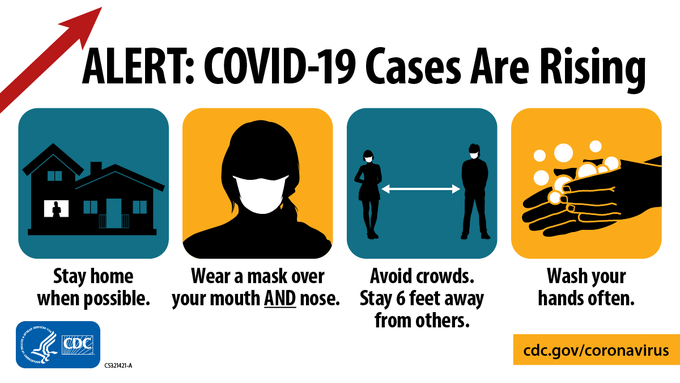
Bottom line, no vaccine is 100% effective, and whatever protection vaccines may provide, people should continue to wear masks, maintain social distancing, wash hands frequently, not touch their face and avoid crowded indoor gatherings until public health officials determine and the infection numbers demonstrate that the virus is under control.
References: